
How to Build the Perfect Cheese Board: A Beginner's Guide
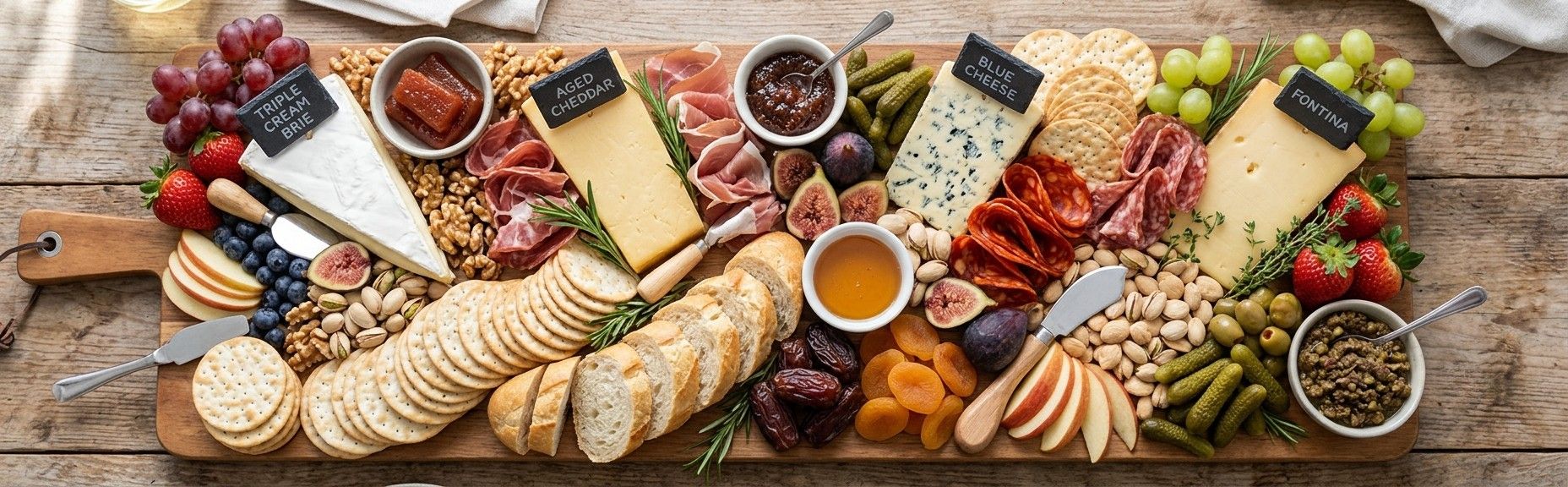
A well-crafted cheese board can turn any gathering into a memorable occasion. Whether you're hosting friends, celebrating a birthday or enjoying a quiet evening with family, a thoughtfully arranged cheese board offers something for everyone.
The good news is that creating an impressive cheese board doesn't require expert knowledge. By selecting a variety of cheeses, complementary accompaniments and presenting them beautifully, you can build a board that looks as good as it tastes.
In this guide, we'll explain everything you need to know to create your first cheese board with confidence.
What Is a Cheese Board?
A cheese board is a selection of cheeses served alongside complementary foods such as crackers, fresh fruit, dried fruit, nuts, preserves and cured meats. The aim is to create a balance of flavours, textures and colours that guests can mix and match according to their preferences.
Cheese boards are suitable for:
- Dinner parties
- Birthday celebrations
- Family gatherings
- Christmas entertaining
- Corporate events
- Wine nights
- Weekend grazing
Step 1: Choose a Variety of Cheeses
Rather than selecting several cheeses with similar flavours, aim for variety.
A beginner-friendly cheese board usually includes:
Soft Cheese
Soft cheeses offer a creamy texture and mild flavour.
Examples include:
- Brie
- Camembert
- Triple Cream Brie
Semi-Hard Cheese
These cheeses are versatile and crowd-pleasing.
Examples:
- Gouda
- Havarti
- Fontina
Hard Cheese
Hard cheeses provide a richer, more intense flavour.
Examples:
- Parmigiano Reggiano
- Aged Cheddar
- Pecorino
Blue Cheese
Blue cheese adds contrast and complexity.
Popular options include:
- Gorgonzola
- Roquefort
- Stilton
Goat or Sheep's Milk Cheese
Adding a different milk type introduces new flavours and textures.
How Many Cheeses Should You Include?
A simple guide is:
| Guests | Cheese Varieties |
|---|---|
| 2–4 | 3 cheeses |
| 4–8 | 4 cheeses |
| 8–12 | 5–6 cheeses |
| 12+ | 6–8 cheeses |
Quality is more important than quantity.
Step 2: Add Crackers and Bread
Cheese tastes best when paired with different textures.
Popular options include:
- Water crackers
- Sourdough crackers
- Lavosh
- Crostini
- Fresh baguette
- Artisan bread
Offer at least two different cracker styles.
Step 3: Include Sweet Elements
Sweet flavours balance salty and creamy cheeses.
Good additions include:
- Fresh grapes
- Strawberries
- Figs
- Pear slices
- Apples
- Fresh berries
Dried fruits also work well:
- Apricots
- Dates
- Cranberries
- Figs
Step 4: Add Crunch
Crunchy ingredients create texture and visual appeal.
Popular choices include:
- Marcona almonds
- Pistachios
- Walnuts
- Cashews
Step 5: Include Cheese Pairings
The best cheese boards include small accompaniments that enhance flavour.
Popular options include:
- Quince paste
- Honey
- Fig jam
- Chilli jam
- Olive tapenade
- Cornichons
- Olives
These pairings allow guests to experiment with different flavour combinations.
Step 6: Arrange the Board
Presentation matters.
A simple method is:
- Place cheeses first.
- Add small bowls for jams and olives.
- Fill larger spaces with crackers.
- Add fruit and nuts.
- Finish with herbs for colour.
Avoid placing everything in neat rows. A more natural arrangement feels abundant and inviting.
Should Cheese Be Served Cold?
No.
Most artisan cheeses taste best when served at room temperature.
Remove cheese from the refrigerator approximately 30–60 minutes before serving. This allows the flavours and aromas to fully develop.
How Much Cheese Should You Allow Per Person?
As a general guide:
- Light entertaining: 80–100g per person
- Main entertaining platter: 120–150g per person
If you're serving cured meats and other appetisers, you can reduce the amount of cheese slightly.
Common Cheese Board Mistakes
Many beginners make these mistakes:
- Serving cheese straight from the fridge
- Choosing only one type of cheese
- Using too many crackers and not enough cheese
- Forgetting sweet accompaniments
- Not providing separate knives for soft and blue cheeses
- Overcrowding the board
Keeping the board simple usually produces the best results.
Frequently Asked Questions
Que: What should every cheese board include?
Ans: A balanced cheese board typically includes three to five cheeses, crackers or bread, fresh fruit, dried fruit, nuts and one or two condiments such as honey or quince paste.
Que: What's the best cheese for beginners?
Ans: Brie, Gouda, Cheddar and Triple Cream Brie are excellent choices because they have approachable flavours and pair well with a variety of accompaniments.
Que: Can I prepare a cheese board in advance?
Ans: Yes. Assemble most of the board a few hours before your event, but add crackers and remove the cheese from the refrigerator about 30–60 minutes before serving for the best flavour and texture.
Que: What's the best fruit for a cheese board?
Ans: Fresh grapes, figs, pears, apples and strawberries are popular choices because they complement both soft and hard cheeses.
Final Thoughts
Building a beautiful cheese board doesn't have to be complicated. By choosing a variety of cheeses, adding complementary crackers, fruit, nuts and condiments, and serving everything at the right temperature, you can create a board that's both visually impressive and full of flavour.
Whether you're hosting a casual catch-up or celebrating a special occasion, a thoughtfully prepared cheese board is one of the easiest ways to bring people together over great food.
-
Posted in
Cheese Board, Cheese Board Guide, Cheese Platter Ideas
